


GearPaw Defenders!
4.5190.00 Reviews
App Specs
- Version
- 0.17.0
- Updated On
- License
- Free
- Downloads
- 500,000+
- Developer
- Perfeggs
- Categories
- Strategy
- Platform
- Android
Screenshots




 Analysis by AppCompare
I approached GearPaw Defenders as a strategy game to dip into between other tasks, and its central appeal is easy to understand: each stage asks me to think about a defensive layout rather than simply rush through enemies. That makes it a natural fit for players who enjoy tower defense but want a lighter tone. I would still treat it as a game that rewards attention, not just something to leave running while I look elsewhere.
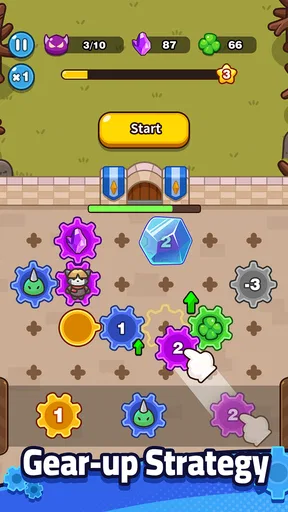
Its focus is on arranging defenders and making choices about how to meet incoming threats. The useful question is not only which unit seems strongest, but what job I need the whole setup to do. A lineup that handles one part of a wave may leave another approach exposed, so the placement decision matters as much as the choice of character.
Where the strategy actually sits
In many tower defense games, the most comfortable habit is to find a favorite unit and put it wherever there is room. GearPaw’s gear-and-layout premise points toward a more deliberate rhythm: look at the space, decide what you need to cover, then commit to a formation. I found that framing more interesting than treating every encounter as a test of raw upgrade strength.
A practical way to approach a new stage is to pause before placing anything and identify the weakest part of the plan. If a defender is meant to hold one side, ask what happens if pressure shifts elsewhere. If a gadget seems attractive, consider whether it improves the whole arrangement or only makes one already-safe area stronger. Those small checks help avoid a common trap in defense games: spending resources on the most visible problem while leaving a quiet gap that becomes important later.
I also like that this style of play gives short sessions a clear purpose. I can enter with one question—whether a different layout will hold up—and leave with a useful answer, even if the attempt does not go perfectly. That is a better fit for a quick break than a strategy game that demands a long uninterrupted campaign just to make one meaningful decision.
Risk, rewards, and the cost of a safe plan
Defensive play is always a negotiation between coverage and concentration. A setup built to handle every possibility can feel dependable, but spreading attention too thin may stop any one part from doing its job well. By contrast, a focused formation may be efficient until an enemy wave exposes its weakness. I would rather think of a strong layout as one with a clear purpose and a fallback, not one that tries to be perfect everywhere.
That mindset also makes upgrades easier to judge. Improving a defender can be satisfying, but the value depends on the role it plays in the plan. Before committing points or equipment, I would ask whether that improvement solves a recurring problem or merely makes a favorite option more appealing. A modest adjustment to a weak link can be more useful than investing further in the strongest part of the team.
Worth Reading Before You Choose

Flipboard Shows What News Apps Must Do Beyond the Feed

Switching to Android Auto Means Rethinking Your Driving Routine

Google Calendar Makes a Crowded Week Easier to Manage

Ludo King Makes the Most of the Minutes Between Plans

Baby Panda World Brings Quick Play to Modern Phones, but Its Game Library Feels Busy

ESPN’s Live Game View Makes Following Close Games Easier
The trade-off is that players who want immediate, effortless progress may find this decision-making less relaxing than a straightforward action game. The game’s strategy hook is also its main demand: I need to notice what is working, take responsibility for my choices, and be willing to revise them. If I want a game that plays itself while I barely look at the screen, this is not the one I would choose.
Learning to adapt rather than repeat
When a plan stops working, I would resist changing everything at once. It is more informative to adjust one element—placement, team balance, or gear—and see whether the result improves. That approach makes each attempt teach me something and helps separate a genuine layout issue from a moment when I simply made a poor call.
This is especially useful for players new to tower defense. Instead of copying a rigid formation, try to understand what each choice is meant to protect. A familiar layout can be a starting point, but repeating it without checking the new situation can turn a good habit into a blind spot. The best counterplay is often a small correction made early, before a weakness shapes the whole encounter.
There is a limit to how much I would infer from a single failed run. A loss can point toward a weakness, but it does not automatically prove that the whole team or upgrade path is wrong. Treating failure as a clue rather than a verdict keeps the experimentation useful and avoids wasting effort on a complete rebuild when one local change could be enough.
Who will enjoy the planning horizon
GearPaw suits players who like to plan a little, watch how a defense holds up, and then refine it. It can work for a short play session when I have time to focus on a stage, and its approachable presentation makes the strategy less intimidating than a dense tactical game. The more I care about understanding why a setup succeeds, the more satisfying that loop is likely to feel.
It is less suitable for someone who wants a deep, simulation-heavy strategy experience or a pure reflex challenge. Compared with action-focused defense games, the emphasis here is on arrangement and decisions, not just quick reactions. Compared with sprawling strategy titles, it offers a lighter entry point, though players seeking extensive systems and long-term campaign management may prefer a more complex alternative.
For a realistic everyday use, I would play a stage during a relaxed break, give it enough attention to judge the layout, then stop rather than rush through several attempts distracted. That keeps the session enjoyable and makes the next decision clearer. If I am tired or have only a moment to spare, a simpler arcade game would be a better choice than starting a strategy run I cannot follow properly.
First Impressions Matter
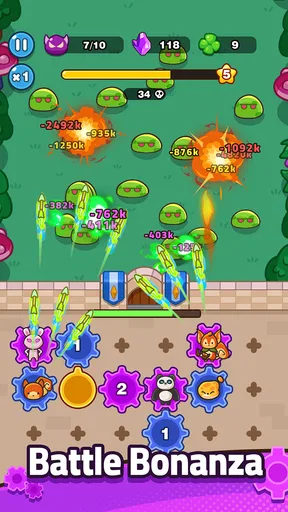
When I first launched GearPaw Defenders, I was immediately drawn to its vibrant graphics. The art style is charming, with quirky characters and colorful landscapes that pop off the screen. It’s got this playful vibe that makes it appealing to both younger audiences and those of us who just enjoy a good, light-hearted game.
The initial tutorial is pretty straightforward, guiding you through the basics without bogging you down with too much information. This is essential because, let's face it, nobody wants to spend their first 20 minutes reading a novel's worth of instructions. The game gets you straight into the action, which I found refreshing.
Gameplay Dynamics
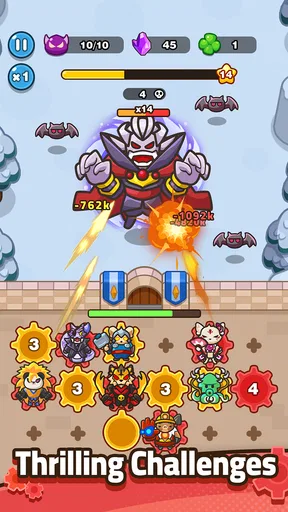
Now, let's talk about what really matters: the gameplay. The premise of GearPaw Defenders is to assemble a team of adorable yet fierce defenders, each with unique abilities, to protect your territory from waves of pesky intruders. It’s a classic tower defense with a twist.
One of the features I loved is the strategic element. You need to think about which defenders to deploy and where to place them for maximum effect. Each level presents a new challenge, and trust me, it gets trickier as you progress. It’s not just about brute force; you have to use your noggin.
The controls are intuitive, making it easy to navigate the battlefield and manage your team. I never felt like the game was getting in the way of my enjoyment, which is always a win in my book.
Leveling Up and Customization
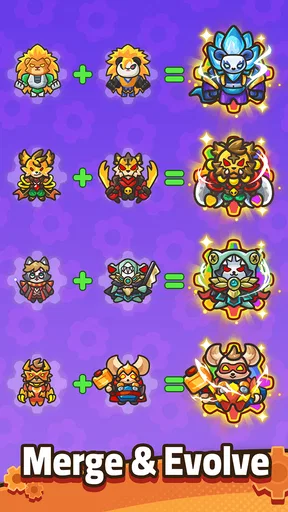
One of the game’s highlights is the customization options. As you advance, you earn points to upgrade your defenders. This adds a layer of depth, allowing you to tailor your team to your preferred playstyle. Whether you want a balanced squad or a powerhouse of special abilities, the choice is yours.
And let’s not forget the gear! Collecting and equipping different gadgets can significantly impact your success in the game. I found myself eagerly anticipating each new unlock, wondering how I could tweak my setup to crush the next wave of enemies.
Soundtrack and Effects
The soundtrack is catchy and complements the game’s playful nature. It’s upbeat without being intrusive, which is just what you need during intense battles. The sound effects add to the experience, with each action accompanied by satisfying audio cues. It’s these little touches that make the game feel polished.
Why You Should Play GearPaw Defenders
So, why should you give GearPaw Defenders a shot? For starters, it’s a perfect blend of strategy and fun. The game is engaging, challenging, and offers plenty of replayability. Whether you’re looking for a quick gaming session or something more in-depth, it has you covered.
Moreover, it’s a game that doesn’t take itself too seriously. The humor woven throughout the narrative and character interactions adds an extra layer of enjoyment. It’s a game that reminds you gaming is supposed to be fun.
In store terms, this is a free strategy game from Perfeggs, with an Everyone age rating. It has a 4.5 average from around 12,000 ratings, and more than 100,000 installs. The current version is 0.11.0, and the game includes optional in-app purchases priced from $0.99 to $99.99 per item. I would keep that purchase range in mind if I prefer to avoid spending inside games; the free entry point makes it easy to try, but I would decide on a personal spending limit before browsing optional purchases.
Its release date is August 15, 2025, and the listed minimum operating system is 7.0. Those details make it easier to check whether the game fits a device before getting started, while the straightforward tutorial helps new players settle into the basic loop. I would not confuse an accessible opening with a promise that every later stage will be effortless: the enjoyment depends on whether I like learning through changing layouts and upgrades.
Small habits that make attempts more useful
One non-obvious benefit of changing only one part of a defense at a time is that it gives me a clearer read on the result. If I rearrange the whole team and swap several gadgets after a setback, I may get through the next wave without knowing what actually helped. A smaller experiment is slower in the moment, but it builds a more reliable sense of which choices matter for my own playstyle.
I would also avoid treating every newly earned upgrade as an instruction to spend it immediately. Holding a choice until I understand which defender is falling behind can make the improvement more purposeful. This is a general planning trade-off rather than a guaranteed winning formula: a saved resource cannot help the current attempt, but an upgrade chosen with a specific weakness in mind is easier to evaluate than one picked simply because it is available.
Gear collection invites a similar bit of restraint. Rather than equipping a gadget just because it is new, I would compare its intended role with the current layout and ask what I would give up by using it. The best option is not necessarily the most exciting one; a less flashy piece of gear may be the better fit if it supports the part of the defense I am relying on.
How it fits different kinds of players
I would recommend it most readily to someone who likes puzzle-like decisions inside a familiar defense format. It is a good match for a player who enjoys trying an idea, observing the result, and making a measured adjustment. The colorful presentation and uncomplicated controls lower the barrier to entry, while the need to consider placement gives experienced tower defense fans something to engage with beyond tapping through a stage.
On the other hand, it is not my pick for a player who wants a long, uninterrupted story, a competitive multiplayer focus, or a highly detailed strategy simulator. Those are different kinds of satisfaction, and a game centered on defensive layouts should not be expected to replace them. If I mainly want immediate action with no planning pause, a fast arcade title is likely to fit better; if I want layers of campaign management, a larger strategy game may be more rewarding.
For a small everyday scenario, imagine having a quiet stretch before dinner and wanting a game that gives the mind something to do without demanding a whole evening. I would choose one stage, make a deliberate formation, and use the result to decide whether to adjust a defender or gear choice next time. If interruptions are likely, I would wait until I can pay attention rather than beginning while juggling messages or chores; the game is more satisfying when I can follow the consequences of my decisions.
What to expect as the novelty settles
The lasting appeal depends less on collecting every option and more on whether the central planning loop continues to interest me. Upgrades and gadgets can make a familiar defense feel different, but they are most meaningful when I use them to test a new approach rather than repeat the same safe setup. Players who enjoy that kind of self-directed experimentation are more likely to find reasons to return than those who need constant new modes or a large narrative framework.
There is also a reasonable distinction between replayability and endless variety. I can revisit a challenge with a different formation and get value from learning, but that does not mean every attempt will feel completely new. If I need a game to keep introducing fresh systems at a steady pace, I would look for a broader strategy experience. If refining a plan is itself satisfying, this smaller-scale focus can be a strength rather than a shortcoming.
In the end, I would approach GearPaw Defenders as a cheerful, approachable strategy game whose best moments come from thinking through placement, upgrades, and gear instead of relying on brute force. Its light presentation makes it easy to try, while its planning loop rewards a little patience and attention. Just keep expectations aligned with that focus: it is a compact defense experience, not a substitute for a sprawling tactics game or a hands-off idle title.
Whether you’re a seasoned tower defense pro or a newbie looking for something new, GearPaw Defenders is well worth your time. So, gear up and dive into this delightful adventure. Who knows? You might just find your new favorite game.
Pros
- Engaging gameplay with strategic depth.
- Visually stunning graphics and effects.
- Intuitive controls make it easy to play.
- Frequent updates with new levels.
- Multiplayer mode enhances replayability.
Cons
- In-app purchases can become costly.
- Occasional lag in multiplayer mode.
- Requires constant internet connection.
- Advertisements can be intrusive.
- Limited offline gameplay options.
FAQs for GearPaw Defenders!
What is GearPaw Defenders! about?
GearPaw Defenders! is an action-packed tower defense game where players must protect the mystical land of GearPaw from waves of mechanical invaders. Players strategically place defensive units and upgrade them to withstand increasingly challenging enemy attacks. The game combines strategy and quick decision-making, offering engaging gameplay for fans of the genre.
What are the main features of GearPaw Defenders!?
GearPaw Defenders! boasts a variety of features, including multiple levels with increasing difficulty, a diverse range of defensive units to deploy, and customizable upgrades to enhance your strategy. The game also offers vibrant graphics, an engaging storyline, and regular updates to keep the gameplay fresh and exciting.
Is GearPaw Defenders! free to play?
Yes, GearPaw Defenders! is free to download and play. However, it includes in-app purchases that offer additional resources, special units, and cosmetic upgrades. While these purchases can enhance the gaming experience, they are entirely optional, and players can enjoy the full game without spending money.
What platforms is GearPaw Defenders! available on?
GearPaw Defenders! is available for both Android and iOS devices. Players can download it from the Google Play Store for Android devices and the Apple App Store for iOS devices. The game is optimized for a wide range of smartphones and tablets, ensuring smooth gameplay across different devices.
How does multiplayer work in GearPaw Defenders!?
In GearPaw Defenders!, the multiplayer mode allows players to team up with friends or compete against others in various challenges. Players can join or create clans, participate in cooperative missions, or engage in competitive leaderboards to earn rewards and climb the ranks. The multiplayer aspect adds a social and competitive dimension to the game.


